

Tungsten-Rhenium Thermocouple + Molybdenum, Tungsten and Tantalum Tubes: Unlock New Possibilities for Extreme High-Temperature Temperature Measurement
Blog post description.
12/19/20255 min read
Tungsten-Rhenium Thermocouple + Molybdenum, Tungsten and Tantalum Tubes: Unlock New Possibilities for Extreme High-Temperature Temperature Measurement
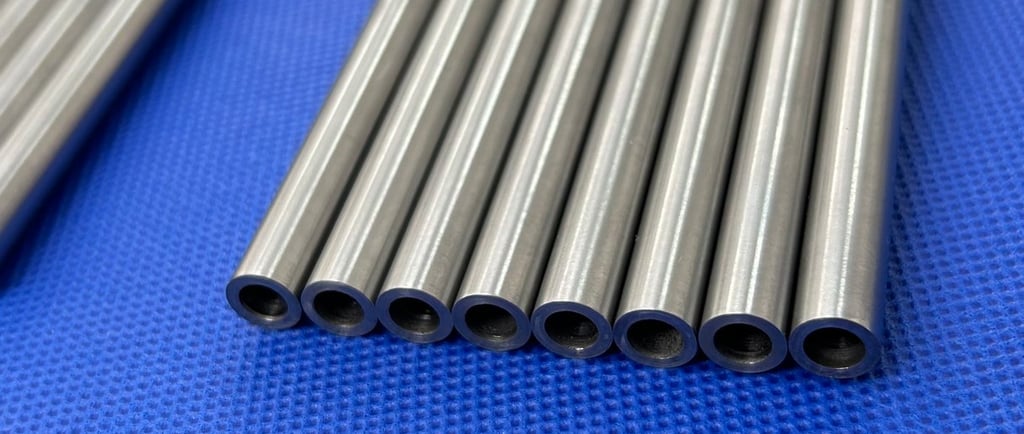
In the extreme environments of industrial production and scientific research, accurate temperature measurement is a key link to ensure process stability and product qualification. Especially in high-temperature scenarios above 1600°C, ordinary temperature measurement components are no longer competent. Tungsten-rhenium thermocouples, with their excellent high-temperature resistance, have become the "main force" in the field of high-temperature temperature measurement. More notably, by scientifically matching our molybdenum tubes, tungsten tubes, and tantalum tubes as protective and adaptive components, the application range of tungsten-rhenium thermocouples has been further expanded, and the temperature measurement stability and service life have achieved a qualitative leap.
I. Core Advantages of Tungsten-Rhenium Thermocouples: The "Accuracy King" of Temperature Measurement in High-Temperature Environments
The core competitiveness of tungsten-rhenium thermocouples comes from their unique material properties. Made of alloys of two high-melting-point metals, tungsten (W) and rhenium (Re), different models (such as WRe5-26, WRe3-25, etc.) have slightly different temperature adaptation ranges. The overall temperature measurement range can cover 0°C-2300°C. Among them, in an inert gas or vacuum environment, it can work stably up to 2300°C, and even in a reducing atmosphere, it can achieve accurate temperature measurement below 1800°C.
Compared with traditional thermocouples, it not only has high temperature measurement accuracy and fast thermal response speed, but also has excellent corrosion resistance and oxidation resistance. It can maintain stable temperature measurement performance in complex and harsh high-temperature environments, making it an ideal temperature measurement choice for high-end fields such as metallurgy, aerospace, and semiconductor manufacturing.
II. Typical Usage Environments and Scenarios: Matching Molybdenum, Tungsten and Tantalum Tubes to Adapt to Full Working Condition Requirements
Extreme high-temperature scenarios are often accompanied by complex medium environments (such as corrosive gases, molten metals, strong radiation, etc.), and a single tungsten-rhenium thermocouple cannot withstand them for a long time. Our targeted molybdenum tubes, tungsten tubes, and tantalum tubes, relying on their respective material advantages, form a perfect match with tungsten-rhenium thermocouples, providing customized temperature measurement solutions for different scenarios.
Scenario 1: Metallurgical Smelting Industry - Stable Temperature Measurement in High-Temperature Molten Environment
Usage Environment: Inside the melting and smelting furnaces of steel and non-ferrous metals, the temperature is as high as 1600°C-2000°C. The furnace is filled with molten metal liquid and high-temperature furnace gas, and there is a certain reducing atmosphere, which puts forward extremely high requirements for the high-temperature resistance and erosion resistance of temperature measurement components.
Adaptation Solution: Select WRe5-26 tungsten-rhenium thermocouple, matched with tungsten tube as the protective sleeve. The melting point of tungsten tube is as high as 3410°C, which is similar to the material characteristics of tungsten-rhenium thermocouple, and can work stably for a long time in a high-temperature environment of 2000°C. It can effectively block the scouring of molten metal liquid and the erosion of high-temperature furnace gas, avoid the contamination or damage of thermocouple wires, ensure the accurate collection of temperature data during the smelting process, and guarantee the uniform alloy composition and stable product quality. If there is a slight corrosive medium in the smelting furnace, it can be replaced with a tantalum tube. The tantalum tube has excellent corrosion resistance, can resist the erosion of various acid and alkali media at high temperatures, and further improve the service life of the temperature measurement assembly.
Scenario 2: Aerospace Scientific Research - Extreme High-Temperature Testing in Vacuum/Inert Gas
Usage Environment: Scenarios such as aero-engine combustion chamber simulation tests and high-temperature performance tests of spacecraft thermal protection materials, the temperature can reach 1800°C-2300°C. The test environment is mostly vacuum or inert gas (such as argon), requiring the temperature measurement components to have extremely low vapor pressure and excellent high-temperature stability.
Adaptation Solution: Adopt WRe3-25 tungsten-rhenium thermocouple, matched with molybdenum tube or tungsten tube protective sleeve. The melting point of molybdenum tube is as high as 2610°C, with low vapor pressure in vacuum environment, which will not produce impurities to pollute the test environment due to high-temperature evaporation, and has good mechanical strength, which can provide reliable support and protection for the thermocouple; if the test temperature is close to the limit of 2300°C, tungsten tube can be selected, whose higher high-temperature resistance limit can ensure that it will not soften or deform at extreme temperatures, and ensure the continuity and accuracy of temperature measurement data.
Scenario 3: Semiconductor and Electronic Manufacturing - Adaptation to Clean Environment under Precise Temperature Control
Usage Environment: Inside semiconductor wafer annealing furnaces and electronic component sintering furnaces, the temperature ranges from 800°C to 1600°C. The environment requires cleanliness and no impurities to avoid metal contamination affecting product performance, and precise temperature control is required to ensure process consistency.
Adaptation Solution: Select high-precision WRe5-26 tungsten-rhenium thermocouple, matched with molybdenum tube protective sleeve. The molybdenum tube has good high-temperature stability and chemical inertness, and will not release impurities in a clean environment below 1600°C, meeting the cleanliness requirements of semiconductor manufacturing; at the same time, the thermal conductivity of the molybdenum tube is moderate, which can quickly transmit the temperature changes in the furnace, making the thermal response speed of the thermocouple faster, realizing precise regulation of the temperature in the furnace, and ensuring the stability of processes such as wafer annealing and component sintering.
Scenario 4: Glass and Ceramic Manufacturing - Temperature Measurement in High-Temperature Melting and Sintering Processes
Usage Environment: Inside glass melting kilns and ceramic firing kilns, the temperature is 1200°C-1800°C. The furnace contains media such as molten glass liquid and ceramic dust, which have certain requirements for the erosion resistance and corrosion resistance of temperature measurement components.
Adaptation Solution: Use tungsten-rhenium thermocouple matched with tantalum tube or molybdenum tube. For the corrosive medium in the glass melting kiln, the corrosion resistance advantage of the tantalum tube can effectively resist the erosion of molten glass liquid and prolong the service life of the temperature measurement assembly; for the high-temperature dust environment in the ceramic firing kiln, the high strength and wear resistance of the molybdenum tube can avoid the sleeve damage caused by dust scouring, while ensuring the temperature measurement accuracy, and provide accurate temperature data for processes such as glass fining and ceramic sintering.
III. Core Summary: Tungsten-Rhenium Thermocouple + Molybdenum, Tungsten and Tantalum Tubes, Unlock New Possibilities for Extreme High-Temperature Temperature Measurement
The excellent high-temperature resistance and precise temperature measurement performance of tungsten-rhenium thermocouples, combined with our targeted R&D molybdenum tubes, tungsten tubes, and tantalum tubes, form a perfect combination of "temperature measurement core + customized protection". Whether it is the extreme high temperature of metallurgical smelting, the vacuum environment of aerospace, or the cleanliness requirements of semiconductor manufacturing, the comprehensive improvement of temperature measurement stability, service life and scenario adaptability can be achieved by selecting the appropriate tube matching.
Our molybdenum tubes, tungsten tubes, and tantalum tubes are all made of high-purity raw materials, and are precisely processed to ensure accurate dimensions and smooth surfaces, which can perfectly fit with tungsten-rhenium thermocouples to ensure heat transfer efficiency and protection effect. If you have specific high-temperature temperature measurement scenario requirements, you can select the corresponding product combination according to the actual temperature range, environmental medium and other conditions, and we can also provide you with customized adaptation solutions to support your production and scientific research work