

Tungsten Crucible: The Ultimate High-Temperature Container for Modern Industry
3/5/20261 min read
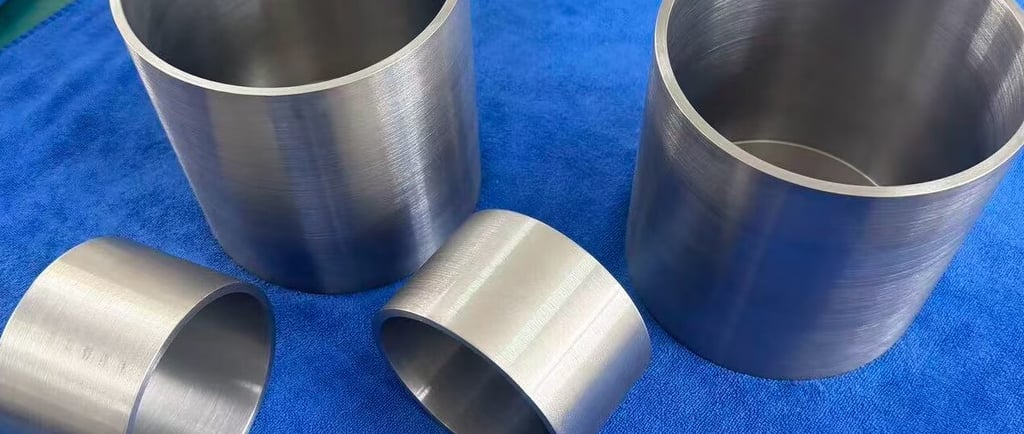
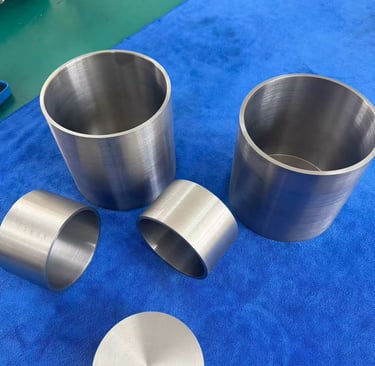
Introduction to Tungsten Crucibles
Tungsten crucibles have emerged as an essential component in various industrial applications, particularly in processes involving extremely high temperatures. Known for their exceptional thermal stability and high melting point, tungsten crucibles are utilized in advanced manufacturing and metal processing sectors. This blog post delves into the properties, applications, and benefits of using tungsten crucibles in modern industries.
Properties of Tungsten Crucibles
Tungsten is renowned for its impressive physical properties, which make it the material of choice for high-temperature containers. With a melting point of 3,422 degrees Celsius (6,192 degrees Fahrenheit), tungsten is capable of withstanding extreme temperatures without deformation. Additionally, its high density offers excellent resistance to thermal shock, making tungsten crucibles reliable for demanding environments.
Moreover, tungsten exhibits low vapor pressure at elevated temperatures, thereby preventing contamination of the materials being processed. This characteristic is particularly beneficial when exact specifications must be met for high-purity substances, such as metals and semiconductors.
Applications of Tungsten Crucibles in Modern Industry
The applications of tungsten crucibles span various industries, including semiconductor manufacturing, aerospace, and materials research. In the semiconductor industry, these crucibles play a pivotal role in the melting and casting of high-purity silicon. The properties of tungsten ensure that the quality of the silicon remains intact throughout the processing stage.
In aerospace applications, where materials must withstand extreme conditions, tungsten crucibles are utilized for the production of high-performance alloys. Furthermore, they are critical in research laboratories, where scientists require high-temperature experiments to analyze material behaviors.
Additionally, tungsten crucibles are often used in the production of ceramics and glasses due to their ability to maintain structural integrity under heat. The versatility of these crucibles highlights their importance in research and industrial contexts.
Conclusion
In conclusion, tungsten crucibles stand out as the ultimate high-temperature containers suitable for modern industry. Their remarkable properties, including a high melting point, thermal stability, and low vapor pressure, make them indispensable in a plethora of applications. As industries continue to push the boundaries of material processing and advanced manufacturing, the role of tungsten crucibles will undoubtedly expand, showcasing their significance as a cornerstone in high-temperature applications.